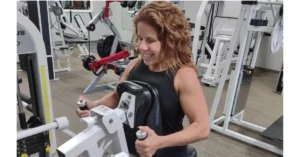
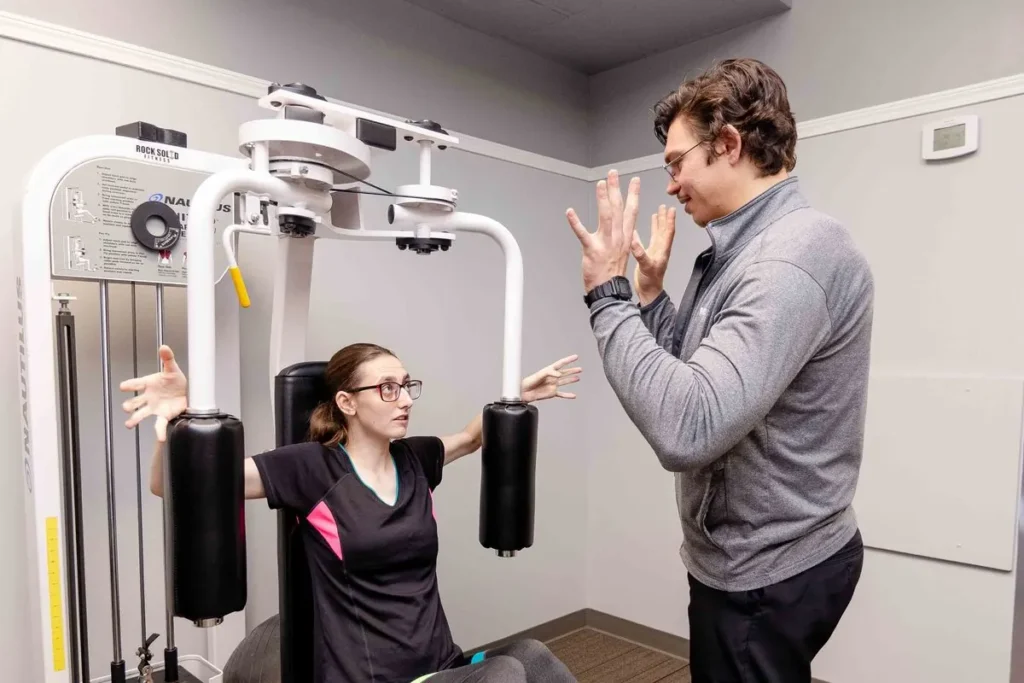
Short, coached sessions can be enough when the work is focused. See how 25-minute strength training works at Rock Solid Fitness in Dunedin, then read the research below.
What the Guidelines Say
The CDC recommends that adults do muscle-strengthening activity on 2 or more days a week, working all major muscle groups. That means legs, hips, back, abdomen, chest, shoulders and arms (CDC).
The guidelines set a number of days, not a number of hours. Two well-run strength sessions a week meet the strength part of the recommendation.
What the Research Says About Short Workouts
A 2021 review in the journal Sports Medicine looked at how to make strength training time-efficient. The authors found that weekly training volume matters more than how often you train, and recommended a minimum of 4 weekly sets per muscle group (Iversen and colleagues, 2021).
The same review recommends prioritizing exercises that use several joints at once, including at least one leg press type exercise, one upper-body pull and one upper-body push. It notes that machines, free weights or both can work, depending on your goals and preferences.
For older adults, a 2015 meta-analysis of 25 randomized trials in healthy adults 65 and older found that two sessions a week was the most effective training frequency for improving muscle strength (Borde and colleagues, 2015).
The American College of Sports Medicine also recommends 2 to 3 days a week for people who are new to strength training (ACSM position stand).
Why 25 Minutes Works
A short session only works when the effort is high. At Rock Solid Fitness, each exercise uses slow, controlled reps until you cannot complete another with good form. Your coach then moves you straight to the next machine, with no waiting around between sets.
Done that way, a full-body workout takes about 25 minutes. Adding more time usually means lowering the effort, which is not the same as doing better work.
Start With a Free 45-Minute Introductory Session
See a 25-minute coached session for yourself. Your free session includes a coached workout.
How to Tell Whether Your Workout Is Hard Enough
Short sessions only work when the effort is high. A simple check is the last rep of each set. If you could easily do five more, the weight is too light. If your form breaks down before you reach the last rep, the weight is too heavy. The right weight is the one where one more rep with good form is not possible.
This is hard to judge on your own, which is why a coach watching every rep matters. Your coach sets the weight, counts the tempo and tells you when to stop.
A Simple Weekly Plan
Two sessions a week work best with a day or more of rest between them, for example Tuesday and Friday or Monday and Thursday. That spacing gives your muscles time to recover before the next session.
If you travel or your week falls apart, protect one session and move the other. One hard session beats two skipped ones. Booking your sessions at the same two times each week also makes them easier to keep, because they become part of your routine.
Why Twice a Week Works
Hard strength training asks your muscles for more than they are used to. Your body gets stronger during the rest afterward. Two sessions a week gives you both the work and the time to recover.
Twice a week is also easy to keep. Two short sessions survive busy weeks, travel and family schedules. If your calendar is the biggest obstacle, see how we coach busy professionals.
When 25 Minutes Is Not Enough
Short workouts are not magic. They fall short when:
- The effort is low, so the last reps are not hard
- Sessions get skipped, so twice a week turns into once a month
- The weights never go up as you get stronger
- Sleep, food and daily activity are ignored outside the studio
That is why your coach records every workout, knows what you lifted last time and follows up on your goals for activity, rest and nutrition.
What a 25-Minute Session Looks Like at Rock Solid
Check in with your coach
Every session opens with a short conversation about how you feel and anything your coach should know that day.
Work each exercise to momentary muscular failure
Your coach picks the exercises, sets the weight and counts slow reps until one more good rep is not possible. Read more on how our method works.
Move straight to the next machine
Short transitions keep the session focused and finished in about 25 minutes. Members train this way in 1-on-1 personal training and in family personal training.
Check With Your Doctor First
If you have a medical condition, recent surgery or pain that has not been checked, talk with your doctor before you start. If you are recovering from an injury, see a physical therapist first and come see us once you are cleared.
How Progress Shows Up
Progress is easy to see when every workout is recorded. The weights go up, the reps get cleaner and everyday tasks like carrying groceries or climbing stairs feel easier. Your coach reviews those numbers with you so you can see the trend, not just how you feel on one day.
Who This Schedule Suits
Two 25-minute sessions a week suit people who want to get stronger without living at the gym. That includes adults over 50, who can read more about strength training over 50.
Our Dunedin studio is two doors to the right of the Walmart at 2110 Main St, Dunedin, FL 34698. We also coach people from Clearwater, Palm Harbor, Safety Harbor and Oldsmar.
Start With a Free 45-Minute Introductory Session
Pick a time in under a minute. Your first session is free and takes about 45 minutes.
Sources
- CDC: Adult Activity, An Overview
- Iversen VM et al. No Time to Lift? Sports Medicine, 2021
- Borde R et al. Dose-Response Relationships of Resistance Training in Healthy Old Adults. Sports Medicine, 2015
- American College of Sports Medicine position stand: Progression models in resistance training for healthy adults, 2009