


Are Push-Ups Wrecking Your Shoulders Without You Even Knowing?
Push-ups have somehow earned a reputation as the gold standard for fitness – one of the best exercises you can do. After all, the military and other high-performance organizations use push-ups as a measurement, so why wouldn’t we?
On the surface, push-ups make sense because they can be performed just about anywhere, without any equipment, and they make us feel productive. But, what I see over and over again, especially with men in their 40’s, 50’s and beyond, is that push-ups are often one of the biggest contributors to nagging shoulder pain that seems to come out of nowhere.
Wearing Down Your Bicep Tendons
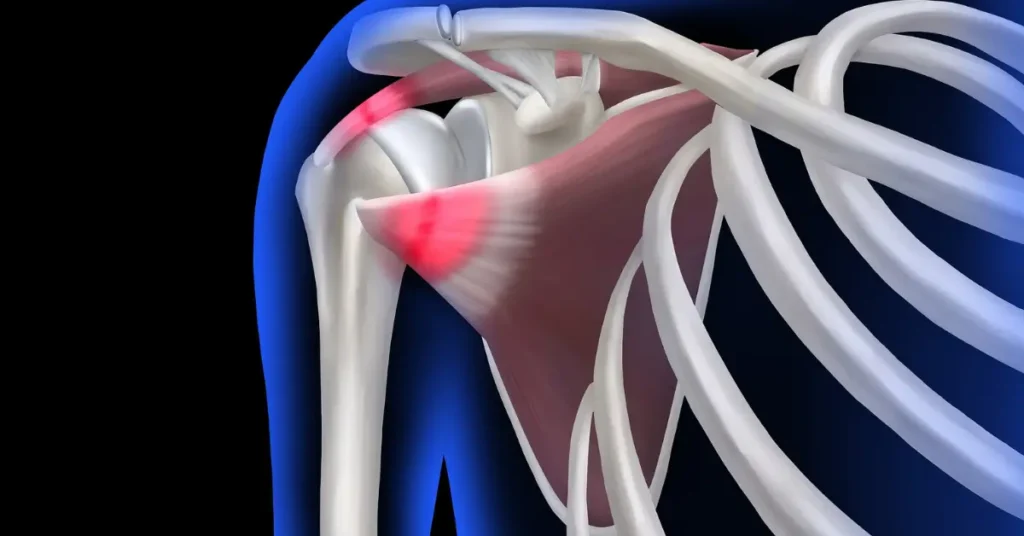
The issue isn’t that push-ups are inherently bad, it’s that most people are doing them in a way that their shoulders simply don’t tolerate well over time, and the problem usually starts with a structure most people have never even heard of, the long head of the biceps tendon.
This tendon runs through the front of your shoulder and plays an important role in stabilizing the joint. When you lower yourself into a push-up, especially if you’re going deep, moving quickly, or doing high reps, you place significant stress on that tendon in a very vulnerable position.
Speeding Up Reps Can Speed Up Wear And Tear
What tends to happen is that people move through push-ups quickly, chasing a number or trying to get through a workout, and in doing so they lose control of the movement, rely on momentum, and unknowingly shift more of the load onto the joint and connective tissue, rather than the muscle where it belongs.
Over time, this creates a wear-and-tear effect. And unlike muscle, tendons don’t recover quickly. That low level irritation, what starts as mild discomfort in the front of your shoulder, can slowly turn into something that lingers, limits your workouts, and eventually requires physical therapy or even surgery.
This is exactly why everything we do inside Rock Solid Fitness and through High Intensity Safe Strength Training® is very intentional with exercise selection and execution. If the risk is not worth the reward, we simply do not do it.
So, when it comes to chest (and shoulder) training we don’t default to push-ups as our primary exercise, because there are far more effective and safer ways to train the chest that allow you to fully challenge the muscle without putting unnecessary stress on the shoulder joint.
Movements like a chest press or a pec fly movement, when done correctly and with control, allow for consistent resistance, better alignment, and a much more joint-friendly experience, which is ultimately what leads to long-term strength and progress without setbacks.

Want to set up your own workout routine in the gym? We’ll help you train on your own to get results, to save time, and to stay injury-free. Get started with all you need to know to apply our High Intensity SAFE Strength Training® in your own gym and on your own time.
How To Do Push-Ups Without Hurting Your Shoulders
Now, this doesn’t mean you have to eliminate push-ups entirely if you enjoy them, but it does mean they need to be approached differently, with a focus on control, intention, and respect for what your shoulder is actually experiencing during the movement. Slowing the movement down significantly, especially on the way down, immediately changes how the exercise loads your body and brings the emphasis back to the muscle instead of momentum.
Limiting your depth by placing a yoga block or even a book under your chest, aligned with your sternum (breastbone), is one of the simplest ways to protect the biceps tendon from being overstretched at the bottom of the movement, and focusing on fewer, higher-quality repetitions instead of chasing a number completely shifts the benefit of the exercise.
Most importantly, any sensation in the front of the shoulder is something to pay attention to, not something to push through, because your body is very good at giving you early warning signs if you’re willing to listen. If we do not listen to these whispers, our body will be happy to scream at us with a much more damaging injury.
We have a common saying at Rock Solid Fitness – The most common injury is a re-injury. You might have experienced this yourself with that “old” issue that seems to resurface at the most inconvenient times.
The Smart Push-up Alternatives
This is exactly why I encourage people to save the risk for the fun things in life – traveling, playing, living fully – and allow your strength training program to serve a different purpose, which is to prepare your body to handle those moments with confidence and resilience, not to be the very thing that sidelines you from them.
What this really comes down to is a shift in how you think about exercise, because the goal is not to prove how hard you can push yourself in a workout, but to build strength in a way that actually supports your body, keeps your joints healthy, and allows you to live a full life without limits.
If this resonates with you and you’ve been dealing with shoulder discomfort, or you’ve simply wondered why certain exercises never quite feel right, this is exactly the kind of thing we help navigate every day at Rock Solid Fitness through our High Intensity Safe Strength Training®, program – an individualized/personalized look at how your body responds to exercise so you can train in a way that truly works for you.
Here’s what training smarter looks like at Rock Solid Fitness when it comes to strengthening your chests, shoulders, and triceps with alternative methods to push-ups.
Less Repetitions
Why do more when you can do less and get better results? Doing hundreds of push-ups weekly can get you stronger, but all those reps pile up in a negative way on your tendons, joints, and connective tissues. We guarantee strength results pushing yourself on exercises like our chest press while significantly reducing the reps that you need to perform – saving wear and tear on your bicep tendon.
Engineered Equipement
Our equipment is engineered to put you in an anatomically safe position. We can adjust everything needed to your body so that you are lifting in a safe range of motion to avoid any over stretching of your bicep tendon and other vulnerable structures in your shoulders. Stay safe while getting strong!
Test Your Strength Wisely
Push-ups are often used as a metric for determining strength gains. Last month you could do 50 push-ups, but now you can do 55 so you know you’re stronger. Next, you have to do 60, 65, and on and on it goes. At some point that becomes way too much. A common alternative is doing one-repetition maxes. However, now you’ll run into the opposite problem of over-use — excessive force. Putting too much weight on your joints may cause damage, even if your muscles can handle it. We choose a smarter alternative of tracking your strength progress with a history of your strength over time in all of your workouts, and perform specific workouts over time to compare performance every few months. No overuse. No Excessive Force. Still all the data you need to track your improvement.
Don’t Just Read About It. Try it!
If you’re ready to start training smarter instead of just harder, we’d love to help you take that next step. They say seeing is believing, but when it comes to your health, feeling is believing. Reach out to feel how our workouts change lives.