


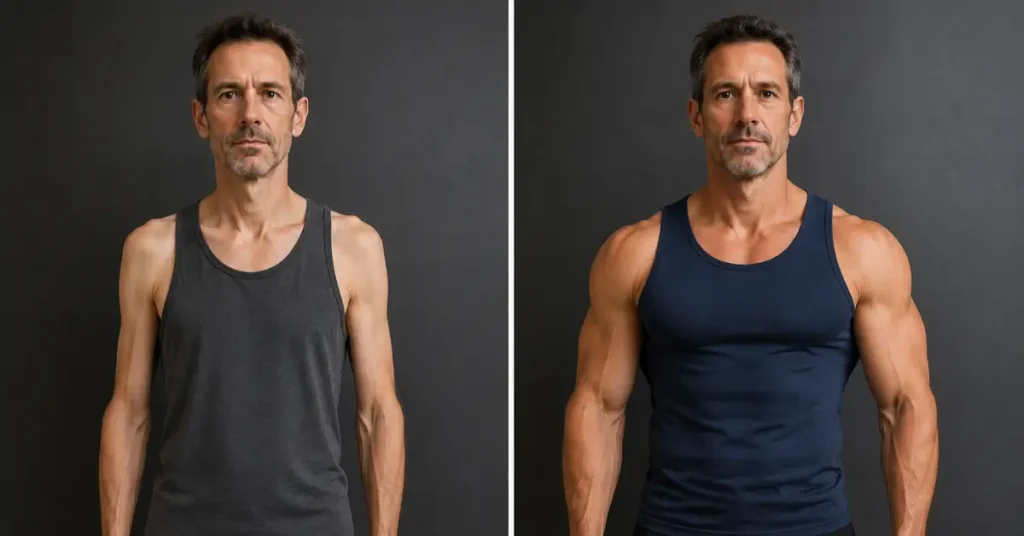
Why Is It So Hard to Gain Muscle?
If gaining muscle were easy, everyone who exercised regularly would be noticeably muscular. But that is clearly not the case. Many people work out consistently for months, or even years, without seeing the changes in muscle size and strength they expected. When progress slows, the typical response is to look for something new: a different workout program, new exercises, more supplements, or the latest training trend.
But the reason muscle can be so difficult to gain is actually much simpler. Your body does not want to build muscle unless you give it a reason to. That may sound strange because we often think of exercise as automatically producing results. We assume that if we lift weights, our muscles should naturally get bigger. But your body is incredibly efficient. It is constantly working to conserve resources and adapt to the demands placed upon it.
So why is it so hard to gain muscle? Building muscle is expensive.
Muscle Is Metabolically Expensive
Muscle is not just something your body builds and forgets about. It requires energy and resources to repair after exercise, maintain on a daily basis, and build additional tissue when necessary. From your body’s perspective, adding more muscle comes with a cost.
Why would your body invest valuable energy into building and maintaining muscle that it doesn’t actually need? It wouldn’t.
Compare that to storing body fat. Body fat is essentially stored energy. Your body is very good at saving excess energy for later use. But muscle is active tissue that requires ongoing resources. This is one reason your body can be reluctant to add significant amounts of muscle.
If your current level of muscle is enough to handle everything you ask your body to do, there is no compelling reason for your body to build more. That is where proper strength training becomes so important.
Your Body Only Changes When It Has To
The human body is remarkably adaptable. When exposed to a challenge that exceeds its current capabilities, the body responds by attempting to become better prepared for that challenge in the future. This is the fundamental principle behind muscular growth.
When a muscle is challenged beyond what it is currently accustomed to handling, your body recognizes that the existing level of strength may not be sufficient if that demand happens again. Given adequate recovery and nutrition, the body adapts by becoming stronger, and potentially building additional muscle tissue.
But here’s the important part:
The stimulus has to be meaningful enough to require an adaptation. Simply going through the motions isn’t enough. You can spend an hour in the gym, sweat heavily, feel tired, and still not provide your muscles with a strong enough reason to grow.
Your body doesn’t measure the amount of time you spend exercising. It responds to the demands placed upon it.
Doing the Same Thing Over and Over Eventually Stops Working
Think back to the first time you performed a particular exercise. Maybe it was a leg press, chest press, or barbell curl. Because your muscles weren’t accustomed to that particular challenge, even a relatively modest amount of resistance may have represented a significant demand.
Your body responded. Over time, you became stronger. The same weight that originally felt difficult became easier. That is progress. But eventually, something important happens. Your body adapts to the demand.
Let’s say you initially struggled to perform 8 repetitions with a particular weight. After several workouts, you become stronger and can now perform 12 repetitions with that same weight. If you continue stopping at 8 repetitions simply because that was your original goal, you’re no longer asking your body to do anything new.
You’ve already adapted. Your muscles are now capable of handling that demand, so there is little reason for your body to invest additional energy into building more muscle. This is where many people get stuck. They continue doing the same exercises, with the same resistance, for the same number of repetitions—month after month—while wondering why their bodies aren’t changing.
The answer is simple: Your body has no reason to change because you haven’t given it a new reason to. You Have to Force Your Body Into New Territory.

Even with the perfect workout routine, your results are determined by your habits outside of the gym. The 4 keys to optimal health are to train right, eat right, rest right, and manage your stress right. It takes a balance of all 4 to get your optimal health. If you are working out, but don’t have the results you are striving for, you may just need to tweak your habits outside of the gym. We have a series of tips to help you get on track with your goals without overcomplicating things.
Muscle growth requires progressive overload.
That doesn’t necessarily mean dramatically increasing the weight every workout. It simply means gradually asking your muscles to do more than they were previously capable of doing.
That progression can come in several forms, but one of the simplest methods is increasing repetitions before increasing resistance. For example, imagine you’re performing an exercise using 150 pounds and currently reach muscular failure at 8 repetitions. Over time, your strength improves. Eventually, you can perform 9 repetitions. Then 10.
Once you can exceed your target repetition range with that weight, it may be time to increase the resistance. The additional weight once again creates a greater challenge, and you begin working your way up again.
This creates a continuous cycle: Challenge → Adapt → Increase the Demand → Adapt Again.
Without progression, the cycle eventually stops.
Why Training Intensity Matters
For your body to recognize that additional muscle is necessary, you have to challenge your existing capacity. This doesn’t mean every workout needs to leave you exhausted for hours or unable to function the next day. It means that the working set needs to be demanding enough to create a meaningful stimulus for the muscle being trained.
At Rock Solid Fitness, this is why we emphasize focused, High Intensity SAFE Strength Training rather than simply accumulating more sets, exercises, or time in the gym.
The goal isn’t to do more for the sake of doing more. The goal is to make the work you do count. When a muscle is pushed close to its current limit, you create a much stronger reason for your body to adapt than if you repeatedly stop well within your existing capabilities.
Once your body adapts, the process begins again. You gradually increase the demand and give your body another reason to become stronger.
More Exercise Isn’t Always the Answer
When people stop seeing progress, their first instinct is often to add more. More exercises. More sets. More workouts. More time spent in the gym. But more isn’t automatically better.
If the additional work doesn’t increase the meaningful demand placed on your muscles, you’re simply doing more of what your body has already adapted to handle. Progress doesn’t come from endlessly repeating what you’ve already proven you can do. Progress comes from challenging your body to do something it isn’t fully prepared to do yet.
That is why tracking your workouts and measuring progress is so valuable. Without knowing what you did last time, it’s difficult to know whether you’re actually asking your body to do more this time. Even small improvements matter. One additional repetition, a slight increase in resistance, or completing the workout routine with less rest between exercises can all represent progress.
Those small improvements accumulate over time.
Your Body Isn’t Working Against You—It’s Being Efficient
It can be frustrating when muscle doesn’t seem to come easily. But your body isn’t trying to prevent you from getting stronger. It’s simply efficient.
Muscle requires energy to build and maintain, so your body won’t invest in additional muscle tissue without a good reason. Your current muscle mass must become insufficient for the demands you’re placing upon it.
That’s your job in training. You have to give your body a reason to change. Challenge your muscles. Work toward the limits of your current capabilities. Track your performance. Progress when you’re able. Then allow your body the recovery it needs to adapt.
The secret to gaining muscle isn’t finding a magic exercise, the newest workout trend, or spending endless hours in the gym. It’s consistently giving your body a reason to become stronger than it is today. Because when your body is forced to choose between remaining the same and adapting to meet a new demand, it has only one logical choice:
Adapt.
Rock Solid Fitness specializes in safely training members in Dunedin, Oldsmar, and surrounding areas. We help ensure stimulating muscles to grow by pushing our members to an intensity that they wouldn’t be able to achieve working out on their own. If you’d like to experience a workout that will get you results, and won’t waste your time working out without gaining muscle, book a free experience with us using the button below.