

Understanding why biomechanics, resistance curves, and muscular specificity matter more than exercise trends
Ask a person in my industry, “What’s the best resistance to use when strength training?” and you will likely get a debate between body weight exercises, bands, kettlebells, barbells, dumbbells, or machines. The truth is, your muscles do not know what tool you are using, and your muscles don’t care. Muscles do not have eyes. They only understand one thing: resistance. More specifically, progressive overload, applied safely and effectively over time.
The real question is not which tool looks the most athletic or trendy. The question is which method allows a muscle to be trained most effectively, most efficiently, most safely, and through the range of motion where that muscle is designed to function and become stronger.
At Rock Solid Fitness, our philosophy is built around High Intensity Safe Strength Training®. That means we are not chasing movement trends, sports mimicry, or complicated exercise combinations designed for social media. We are focused on strengthening the body with precision, safety, and measurable progression.
Your Muscles Don’t Care – But Here’s Why You Should
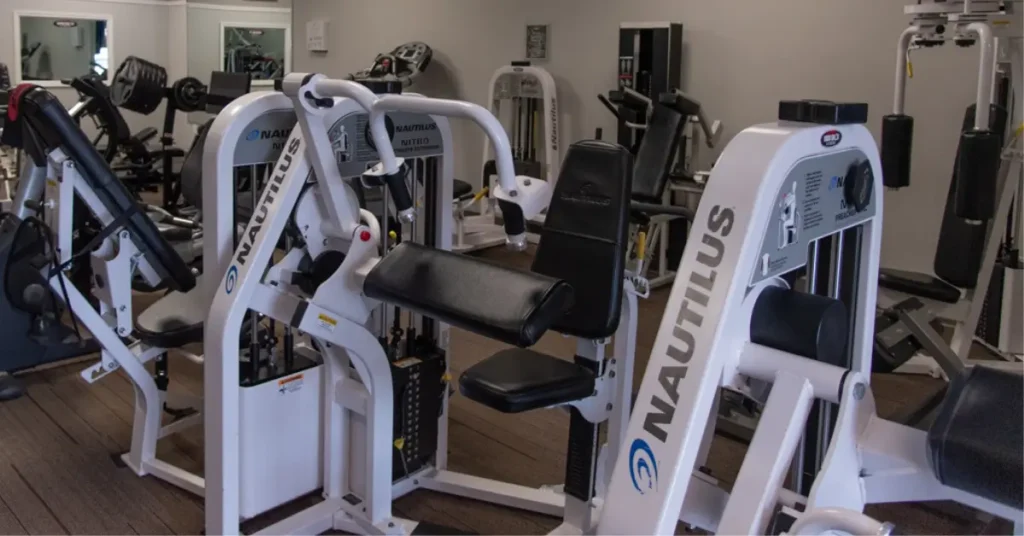
Every muscle in the body has a specific function and a specific strength curve. A properly engineered resistance machine is designed to match that strength curve throughout the entire range of motion. This is one of the primary reasons why advanced strength training machines are superior tools for developing strength safely and efficiently.
Many people mistakenly believe strength training should mimic sports or “functional” movement patterns. While that idea sounds logical on the surface, it often creates inefficient muscular loading and unnecessary complexity for the nervous system. Specificity matters. If the goal is to strengthen a muscle, then the muscle should be trained directly, independently, and through the range of motion where it is designed to produce force.
When multiple muscles are combined into complicated movement patterns, the body simply finds ways to compensate. Stronger muscles dominate while weaker muscles continue to avoid work. Over time, this creates imbalances, inefficient loading patterns, and increased vulnerability to injury.

Want to set up your own workout routine in the gym? We’ll help you train on your own to get results, to save time, and to stay injury-free. Get started with all you need to know to apply our High Intensity SAFE Strength Training® in your own gym and on your own time.
Weaknesses In Different Types Of Resistance
Bands are a perfect example of resistance that often works against human biomechanics. With most exercises, elastic resistance becomes hardest when the muscle is in a weaker position and easiest when the muscle is in its strongest position. This is the opposite of what we want for safe and effective muscular loading. The result can place excessive stress on joints and connective tissues when the muscle is least capable of producing force safely.
Body weight training can absolutely be effective, especially for beginners. However, progression becomes difficult once a person adapts to their own body weight. In many body weight movements, certain muscles are also excessively stretched in compromised positions (see how push-ups in this manner can destroy your shoulders) simply because the resistance cannot be adjusted precisely to the individual. Eventually, progression either stalls or movements become increasingly risky in pursuit of greater difficulty.
Kettlebells are often used with momentum-based movements. The problem with momentum is that force is naturally transferred away from the muscle and absorbed by the joints and connective tissues instead. In the human body, joints are often the most vulnerable structures to repeated forceful loading.
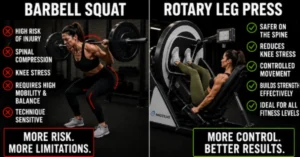
Dumbbells and barbells certainly have value and can be effective tools in certain applications. However, gravity creates limitations because resistance is dependent upon body position and leverage. This means there are portions of many exercises where muscles are either underloaded or excessively loaded in vulnerable positions. In addition, free weights require stabilization demands that often become the limiting factor instead of muscular fatigue itself.
An interesting note on barbells – the revolving sleeve barbell was invented in the early 1900s, the same era the Wright Brothers took their first flight. Engineering has evolved dramatically since then. We would never choose to fly across the country in the Wright Brothers’ original airplane simply because it was the first version of flight technology. Strength training equipment has evolved as well. Properly engineered machines represent decades of advancement in biomechanics, resistance curves, safety, and human performance.
The Best Exercise Equipment Options
At Rock Solid Fitness, we believe the best exercise equipment is the equipment that allows a muscle to be challenged intensely without unnecessarily exposing joints, connective tissue, or vulnerable positions to excessive force. The objective is not to look impressive or blend in with everyone else in the gym. The objective is to create a stronger, healthier, more resilient body.
Trying to combine strength training with sports skills or activities of daily life often makes both less effective. Strength training is meant to strengthen muscles, not practice skills. Sports movements and activities of daily life should be practiced through the activity itself. When exercises become overly complicated, the nervous system focuses more on coordination and balance than fully loading and strengthening the muscle.
One of the core principles of High Intensity Safe Strength Training® is understanding that the stronger a muscle is, the more protection it can provide to the joints it surrounds and supports. Weak muscles force joints, tendons, ligaments, and connective tissues to absorb stress they were never designed to handle independently. Strong muscles act as shock absorbers and stabilizers for the body.
This is why precision matters for all muscles, not what some refer to as the ‘big 5’ or traditional compound movements. Strength training the deeper, smaller muscles through their intended action is crucial for muscular balance and joint protection.
When resistance is applied appropriately through a muscle’s natural range of motion, strength improves while unnecessary orthopedic stress is minimized. That is the foundation of intelligent strength training.
The goal should never be to survive a workout. The goal should be to stimulate the body to adapt positively. When strength training is done correctly, the body becomes stronger, more resilient, and more capable in everyday life.
Strength is not about punishment. It is protection.